EU CBAM 2026: What Importers Must Do Now (Full Compliance Guide)
EU CBAM in 2026: What Importers Need to Do Now (And Why It's More Than Just a Carbon Tax)
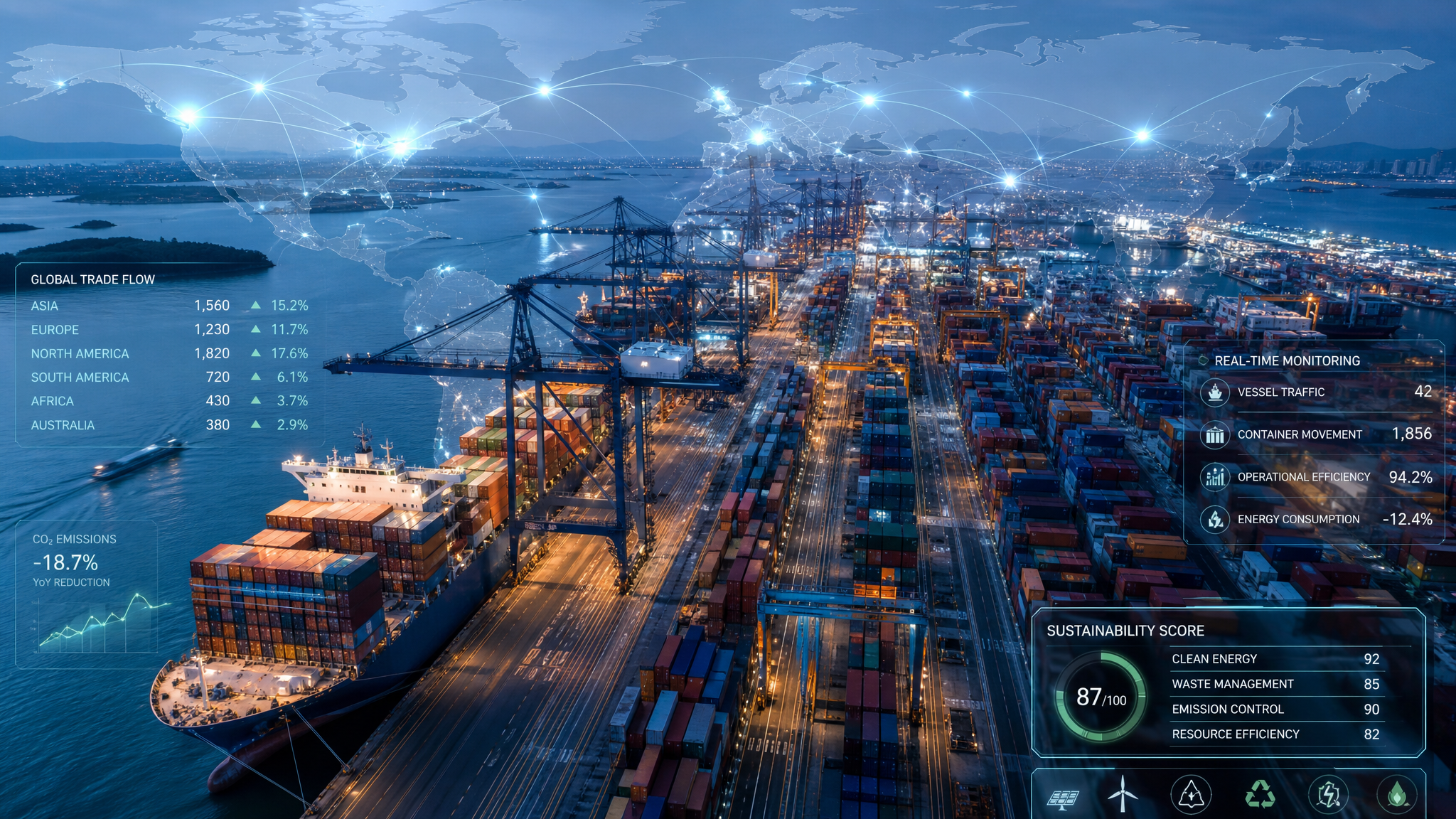
As of January 1, 2026, the European Union's Carbon Border Adjustment Mechanism (CBAM) has shifted from a transitional reporting exercise into a definitive financial regime. If your procurement team imports steel, aluminum, cement, fertilizers, hydrogen, or electricity into the EU, this is no longer a sustainability side project. It is a core trade compliance and cost management obligation that will reshape sourcing decisions, supplier contracts, and landed cost calculations for the next decade.
The message is simple: CBAM compliance in 2026 is mandatory, financially material, and operationally complex. Procurement directors who treat it as a tax-only issue will miss the strategic implications. Those who treat it as a pure compliance exercise will overlook the cost exposure. This guide explains what importers must do now, what it costs, and how procurement teams can turn compliance into competitive advantage.
What Is CBAM and Why 2026 Changes Everything
CBAM was designed to prevent "carbon leakage" — the risk that EU manufacturers relocate to countries with weaker climate policies, undermining the EU's own emissions cuts. The mechanism ensures that imported goods carry the same carbon price as goods produced inside the EU under the Emissions Trading System (EU ETS).
From 2023 through 2025, CBAM operated in a transitional phase. Importers reported embedded emissions, but there was no financial obligation. That changed on January 1, 2026. The definitive regime now requires importers to purchase and surrender CBAM certificates for every tonne of CO₂ equivalent embedded in covered goods. This transforms CBAM from a data collection task into a direct cost line item that procurement teams must budget, forecast, and manage.
The first official CBAM certificate price was published on April 7, 2026, at €75.36 per tonne of CO₂e for Q1 2026 imports. This price is tied directly to the weighted average of EU ETS auction clearing prices, and from 2027 onward it will update weekly rather than quarterly. That volatility means procurement teams can no longer set annual carbon cost assumptions and forget them. They need to monitor carbon markets with the same discipline they apply to freight rates and commodity prices.
The transition also introduces strict operational deadlines. Importers must now secure "Authorized CBAM Declarant" status, submit verified emissions data, and surrender certificates by fixed annual deadlines. Missing any of these steps risks border delays, penalties, and even revocation of import authorization.
Which Products and Industries Are Covered
CBAM applies to six categories of goods imported into the EU: iron and steel, aluminum, cement, fertilizers, hydrogen, and electricity. The scope includes not only finished products but also embedded components — meaning downstream manufacturers using imported steel or aluminum in their own goods may still face indirect CBAM exposure through their supply chain.
For steel and aluminum, which together represent the largest import value under CBAM, the cost impact varies dramatically by production method. Blast Furnace-Basic Oxygen Furnace (BF-BOF) steel, common in China and India, carries far higher embedded emissions than Electric Arc Furnace (EAF) steel made from scrap. For aluminum, the carbon intensity of the electricity grid used in smelting is a critical cost driver. Sourcing from smelters powered by hydroelectric or renewable energy can cut CBAM exposure by 60% or more compared to coal-powered production.
Cement and fertilizers present their own challenges. Cement process emissions from calcination are difficult to abate, making energy-efficient kilns a key differentiator. Fertilizer costs are driven by natural gas consumption in ammonia production, which means suppliers with access to low-carbon hydrogen or carbon capture technology will hold a significant CBAM advantage.
Hydrogen shows the widest cost range of any CBAM sector. Grey hydrogen produced from natural gas carries high embedded emissions, while green hydrogen from renewables has near-zero emissions. As the hydrogen market scales, procurement teams will need to verify production pathways with the same rigor they apply to country of origin.
The embedded nature of CBAM costs means procurement teams should evaluate their full bill of materials, not just direct imports. A European manufacturer importing aluminum sheet may face direct CBAM costs, but one using imported aluminum components in finished goods may face indirect exposure through supplier pricing pass-throughs. Understanding this full supply chain footprint is critical for accurate cost modeling.
The Operational Requirements: What Importers Must Report
CBAM compliance in 2026 follows a structured, six-step workflow that importers must integrate into their standard procurement and customs processes.
Step 1: Become an Authorized CBAM Declarant. Any entity importing more than 50 tonnes of covered goods annually must hold this status. The application runs through the Authorization Management Module (AMM) in the central CBAM Registry. The critical deadline was March 31, 2026 — importers who applied by then can continue importing provisionally while their application is processed. Those who missed it risk goods being blocked at the border.
Step 2: Report Embedded Emissions. Importers must calculate and report the actual embedded emissions in their imported goods, including both direct emissions (from production processes) and indirect emissions (from electricity consumed). The EU has published default emissions values as a fallback, but these are deliberately conservative and punitive. Using verified actual data from suppliers can reduce certificate costs by 30% to 85% depending on the sector and production method.
Step 3: Secure Third-Party Verification. All reported actual emissions must be verified by an EU-accredited independent verifier. A physical site visit to the production facility is mandatory for the first year of verification, with subsequent visits required at least every two years. This means procurement teams must now vet suppliers not just on price, quality, and delivery — but also on their ability to produce auditable emissions data and host verifiers.
Step 4: Lodge Customs Declarations with CBAM Codes. Importers must use specific TARIC document codes (such as Y128) in their customs declarations to prove authorized status. Customs authorities perform automated checks against the CBAM Registry, and mismatches can trigger delays or inspections.
Step 5: Submit Annual Declaration and Surrender Certificates. By May 31 of each year, declarants must submit an annual declaration detailing total verified embedded emissions for the prior calendar year, and surrender an equivalent number of CBAM certificates. The first surrender for 2026 imports is due May 31, 2027. Starting in 2027, declarants must also hold certificates equivalent to at least 50% of year-to-date embedded emissions at the end of each quarter.
Step 6: Claim Deductions for Foreign Carbon Prices. If a carbon price was already paid in the country of origin through an emissions trading system or carbon tax, importers can deduct that amount from their CBAM obligation. This requires certified evidence of the price effectively paid, and if the foreign system allows international carbon credits, their use is capped at 10% of the compliance obligation for CBAM purposes.
This workflow is not a one-time setup. It requires continuous supplier engagement, data management, and financial planning. Procurement teams that treat it as a customs-only task will find themselves scrambling for supplier data at the annual deadline.
Cost Impact: How CBAM Affects Landed Costs and Procurement Decisions
The financial impact of CBAM in 2026 is being phased in gradually. The "CBAM factor" for 2026 is only 2.5% of the total potential liability, rising annually until it reaches 100% in 2034. This phased approach gives procurement teams time to adjust, but it also means the full cost is still coming.
At the Q1 2026 certificate price of €75.36 per tonne CO₂e, a procurement team importing 10,000 tonnes of BF-BOF steel with embedded emissions of 2.5 tonnes CO₂e per tonne of steel would face a CBAM cost of roughly €47,100 for the year — after applying the 2.5% CBAM factor. By 2034, that same import volume could cost over €1.8 million annually at current carbon prices. If EU ETS prices rise toward the €100-€150 range projected by analysts, the long-term cost could exceed €3 million per year for this single category.
This fundamentally changes how procurement teams should evaluate the total cost of ownership (TCO) of their supply base. A low-cost Chinese steel supplier may still look attractive on a unit price basis, but once CBAM, freight, and inventory carrying costs are fully loaded, a higher-priced European or nearshored supplier with lower embedded emissions may offer better total economics. Procurement teams need to build CBAM cost calculators into their sourcing models and re-run supplier comparisons with carbon-inclusive pricing.
The cost also creates new leverage in supplier negotiations. Procurement teams can now credibly request verified emissions data, push suppliers toward lower-carbon production methods, and structure contracts with carbon adjustment clauses. Suppliers who cannot or will not provide emissions transparency may find themselves competitively disadvantaged against rivals who can.
Strategic Responses: What Procurement Teams Should Do Now
CBAM compliance is not just a cost to manage — it is an opportunity to reshape the supply base for lower carbon intensity and higher resilience. Here are five strategic actions procurement teams should take immediately.
First, engage suppliers on emissions data now. The biggest operational risk in CBAM is not the certificate price — it is the inability to get verified emissions data from suppliers on time. Procurement teams should integrate emissions data requirements into supplier contracts, onboarding processes, and quarterly business reviews. The CBAM Registry includes an O3CI module where non-EU suppliers can upload verified data directly for their EU customers, streamlining the data flow. Procurement teams should familiarize themselves with this portal and guide key suppliers through the registration process.
Second, re-evaluate the supply base through a carbon lens. Run a CBAM cost scenario analysis on every covered category. Identify high-emission suppliers, high-risk countries, and production methods with the largest embedded carbon footprints. Compare these findings against alternative sourcing options — lower-carbon producers, nearshored suppliers, or vertically integrated partners. This analysis should be updated quarterly as CBAM factors rise and certificate prices shift.
Third, amend contracts with CBAM cost pass-through clauses. Many procurement contracts signed before 2026 did not account for carbon border costs. Teams should review active agreements and negotiate amendments that clarify who bears CBAM costs, how they are calculated, and how price adjustments are triggered. This is especially important for long-term supply agreements where the CBAM factor will rise from 2.5% to 100% over the contract life.
Fourth, invest in carbon accounting and tracking tools. The days of managing CBAM data in spreadsheets are numbered. Procurement teams need systems that can collect supplier emissions data, track certificate purchases, forecast CBAM liability, and integrate with ERP and customs platforms. Several carbon accounting and trade compliance platforms now offer CBAM-specific modules. Evaluating these tools should be a 2026 priority for any procurement organization with significant covered imports.
Fifth, treat CBAM as a cross-functional program, not a procurement silo. The definitive regime requires coordination between procurement (supplier engagement), finance (budgeting and certificate purchases), legal (contract amendments), compliance (reporting and verification), and sustainability (decarbonization roadmaps). Procurement teams should convene a CBAM working group with representatives from each function and establish clear accountability for data collection, cost forecasting, and compliance deadlines.
Common Mistakes and Compliance Risks to Avoid
Even well-intentioned procurement teams are making costly mistakes in the first year of CBAM's definitive regime. The five most common errors are:
Missing the authorization deadline. Without Authorized CBAM Declarant status, importing covered goods becomes illegal. This is a supply chain paralysis risk, not a paperwork issue.
Over-relying on default values. The EU's default emissions values are intentionally high to punish inaction. Using them as a long-term strategy is a costly mistake when verified supplier data can cut certificate costs by 30% to 85%.
Waiting until the deadline to collect supplier data. The annual declaration is due May 31, but the data collection must start on day one of the calendar year. Procurement teams that wait until Q2 to ask suppliers for emissions data will face delays, gaps, and potential penalties.
Misclassifying goods. Using the wrong customs tariff codes (CN codes) leads to incorrect reporting, potential penalties, and administrative chaos. This foundational error compromises every subsequent compliance step.
Treating CBAM as a siloed task. CBAM is not just a tax or sustainability issue. It requires cross-functional collaboration. Teams that fail to align procurement, finance, legal, and compliance will find themselves underprepared and over budget.
The Broader Macroeconomic Signal: CBAM as a Template for Global Trade
The EU's CBAM is the first major carbon border mechanism in force, but it will not be the last. The United Kingdom is developing its own CBAM, planned for launch on January 1, 2027, covering iron, steel, aluminum, cement, fertilizers, and hydrogen. While similar to the EU model, the UK version will differ in scope and phasing, and it will not include glass or ceramics in its initial phase. For procurement teams operating across both markets, this means two parallel compliance regimes with distinct reporting requirements and certificate systems.
The United States has no federal CBAM and no national carbon price, making a carbon border mechanism politically difficult. However, bipartisan legislation like the PROVE IT Act aims to collect data on the carbon intensity of industrial goods, laying groundwork for a future border adjustment. For now, U.S. exporters to the EU are fully subject to CBAM, and U.S. procurement teams sourcing from high-carbon regions will face the same cost pressures as their European counterparts when importing into the EU.
What this means for global procurement strategy is clear: carbon border adjustments are becoming a permanent feature of international trade. The EU model is the template, but every major economy will adapt it to its own regulatory framework. Procurement teams that build carbon-aware sourcing, supplier data management, and compliance infrastructure now will be positioned to adapt as new regimes emerge. Those that wait will face repeated disruption with every new border mechanism.
For procurement leaders, this also creates a strategic arbitrage opportunity. Companies that master CBAM compliance early can build lower-carbon supply chains faster than competitors, turning regulatory cost into competitive advantage. The same logic that applies to post-holiday supply chain arbitrage strategies applies here: predictable disruptions create predictable windows for competitive positioning. CBAM is a massive, predictable disruption. The teams that prepare for it now will arbitrage it best.
Authoritative sources for further reading: For the full regulatory text, see Regulation (EU) 2023/956 establishing CBAM. For official guidance, pricing updates, and registry access, visit the European Commission's CBAM homepage.


Comments
Post a Comment