How Tariff Volatility Is Rewriting Global Procurement in 2026
How Tariff Volatility Is Rewriting Global Procurement Strategies in 2026
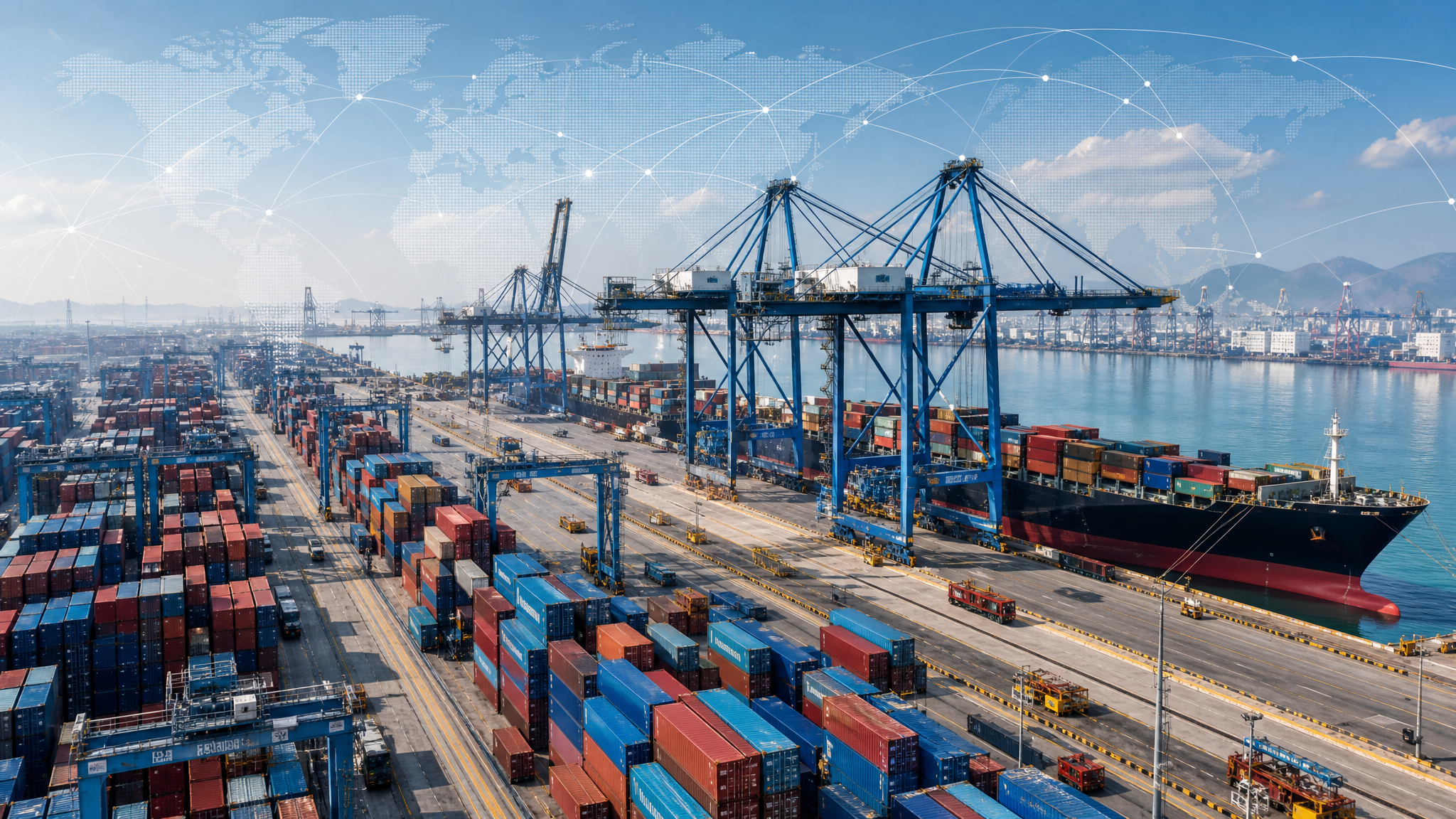
If your procurement team is still awarding contracts to the lowest unit-price bidder, you are leaving margin on the table—and maybe a lot of it. In 2026, tariff volatility has become the single biggest external shock to industrial supply chains, and the buyers who are winning are the ones who rewrote their playbooks months ago.
The numbers tell the story. The U.S. average effective tariff rate (AETR) climbed from roughly 2.2% in 2024 to an estimated 17–18.5% by early 2026, driven by stacked measures on Chinese goods, steel and aluminum, autos, and EU imports. According to analysis from the New York Fed, U.S. firms and consumers absorbed nearly 90% of that burden in the first eight months of 2025, with foreign exporters passing through only a sliver of the cost. The Yale Budget Lab projects an effective ~$1,500 annual food-cost increase per typical U.S. household, while the Fed attributes roughly 0.5–0.75 percentage points of incremental inflation directly to tariffs.
That is not a rounding error. It is a structural shift in how procurement must evaluate cost, risk, and supplier relationships.
The New Normal: Why Tariff Volatility Became Procurement’s Biggest Risk
Tariffs are no longer an edge case managed by trade compliance. They are a board-level risk that redefines global procurement strategy week by week.
The WTO’s October 2025 outlook update raised 2025 global merchandise trade volume growth to 2.4%, driven in part by frontloading and AI-related goods, but slashed the 2026 forecast to just 0.5% as the delayed tariff bite takes hold. Thomson Reuters’ 2026 Global Trade Report found that 72% of trade professionals identify U.S. tariff volatility as the most impactful regulatory change, and 76% believe the new U.S. tariff posture is permanent for at least the next four years. Perhaps most tellingly, 91% of procurement decision-makers expect new trade-policy disruptions.
The implication is clear: tariff uncertainty is not a temporary storm to wait out. It is the weather.
From Lowest-Unit Price to Landed-Cost Resilience
The smartest procurement organizations have stopped optimizing for purchase price and started optimizing for total cost of ownership (TCO). Gartner research shows that 72% of sourcing and procurement leaders now plan to deliver value primarily through TCO optimization, not unit-cost reduction.
Modern landed-cost models now incorporate tariff and duty layers at the HTS line level, freight-mode variability, inventory carrying costs, compliance overhead, and even disruption insurance. McKinsey notes that organizations focusing only on year-one costs typically understate true lifecycle cost by 25–30%. Automakers that shifted to lifecycle-cost thinking have reported TCO reductions of up to 25%.
For industrial buyers, the practical shift means rebuilding every should-cost model to include tariff stacking, country-of-origin rules, and the cascading compliance burden of regulations like the EU’s Carbon Border Adjustment Mechanism (CBAM) and deforestation rules.
Building Scenario Models That Survive Policy Shocks
Static budgets die in volatile tariff environments. KPMG’s 2026 supply-chain trends report highlights scenario simulators and digital twins as central planning tools, allowing procurement teams to model overnight changes in landed cost under multiple tariff regimes, route disruptions, and supplier failures.
A useful scenario framework runs three cases: a baseline reflecting current tariff schedules, a stress case with an additional 10–25% duty layer, and a decoupling case simulating a full breakdown in trade relations with a primary supplier country. Running these quarterly—not annually—gives procurement the data needed to justify dual-sourcing investments, safety-stock buffers, and contract renegotiations before a crisis hits.
Nearshoring, Dual Sourcing, and the Redesign of Supplier Maps
When tariffs erase the cost advantage of distant low-cost sources, geography becomes a strategic weapon. The dominant pattern in 2026 is "China + 1" or "China + many": retaining Chinese capacity for efficiency while building parallel supply in connector economies.
Bloomberg Economics identifies Vietnam, Indonesia, Mexico, Poland, and Morocco as the key "connector economies" absorbing redirected trade flows. QIMA data shows inspection demand surging in Morocco (+53% year-over-year), Egypt (+73%), and Tunisia (+35%) as EU buyers shift sourcing westward. Apple has publicly targeted shifting 15–20% of production to India and Vietnam by 2026. Whirlpool relocated washing-machine production to Argentina, exporting 70% of the 300,000 annual units to Mexico and Latin America to manage energy and logistics costs.
Mexico remains the nearshore leader for U.S. industrial buyers, protected by USMCA tariff treatment and strong aerospace, medical device, and appliance clusters. But labor costs there have risen 14% since 2020, and U.S. inspection and audit demand jumped 17% year-over-year in Q3 2023 as buyers flooded in. The lesson: nearshoring is not a free lunch. It is a risk-adjusted trade-off.
Timing also matters. Buyers who understand post-holiday procurement arbitrage strategies can exploit seasonal production windows to smooth transitions and lock in capacity before peak demand returns.
The Hidden Costs of Supplier Transitions
Moving a supplier footprint involves more than a new purchase order. Procurement teams must budget for supplier qualification, quality audits, tooling transfer, compliance onboarding, and IT integration. McKinsey and IMF research suggest aggressive reshoring can cost 2.5× cumulative benefits when labor markets are tight, and the OECD has warned that broad reshoring could cut global trade by roughly 18% and global real GDP by more than 5%.
Dual sourcing is often the more pragmatic middle path. Apple, Tesla, and Toyota have all pursued dual-sourcing strategies for memory chips, semiconductors, and just-in-time components, and manufacturers with high supply-base diversification maintained materially higher inventory availability during recent disruptions.
Renegotiating Contracts for Tariff Uncertainty
Contracts written in 2023 are dangerously out of date. Thomson Reuters’ 2026 survey found that 57% of organizations are actively renegotiating supplier contracts, and 65% are changing sourcing patterns outright.
The most effective renegotiation tactics in 2026 include:
- Tariff pass-through clauses with defined sharing formulas (for example, 50/50 splits on duties above a threshold) and index-linked adjustments tied to specific HTS-line rates.
- Incoterms re-selection, shifting from DDP to DAP or FCA to clarify duty liability, or reversing the shift where country-of-origin engineering justifies it.
- Change-in-law and force majeure provisions that explicitly trigger on tariff increases, sanctions, or export controls, with reciprocal exit rights when thresholds are breached.
- Rebate and volume structures that build tariff-loss-sharing into multi-year commitments.
- Should-cost transparency, requiring open-book costing on raw materials, labor, and tariff impact so buyers can challenge opportunistic markups.
Bank of America research confirms the mindset shift: procurement is moving from "cheapest country" to "safest country" sourcing, accepting modest cost premiums for stability.
How Technology Is Helping Buyers Respond in Real Time
Manual spreadsheets cannot keep pace with weekly tariff updates. Thomson Reuters reports that 58% of trade professionals now use trade and supply-chain data analytics, 56% use ERP automation, and 54% use supply-chain visibility tools. Gartner forecasts that by 2028 approximately 90% of B2B buying will be intermediated by AI agents.
The technology stack emerging in 2026 includes:
- AI-enabled HTS classification and tariff monitoring that flags exposure changes as soon as policy announcements drop.
- Multi-tier supplier risk platforms from providers like Resilinc, Z2Data, and Everstream Analytics, offering predictive disruption alerts and sub-tier visibility.
- Agentic procurement systems embedded in Source-to-Pay and contract lifecycle management tools for autonomous RFP analysis, supplier scoring, and risk monitoring.
- Compliance automation for overlapping regimes including U.S. TSCA PFAS reporting, EU CBAM, and EUDR documentation.
The supply-chain risk software market is growing at roughly 10% CAGR and is projected to exceed $8 billion in the early 2030s. Buyers who delay technology investment are effectively choosing to navigate tariff volatility blindfolded.
Bottom Line: What Procurement Leaders Should Do Now
Tariff volatility is not a problem to solve. It is a condition to manage. The procurement teams that are thriving in 2026 have made five deliberate shifts:
- Elevate trade risk to the C-suite. Establish a cross-functional tariff war room with Procurement, Finance, Tax, Legal, and Operations.
- Rebuild landed-cost models to include tariff stacking, compliance overhead, and disruption insurance.
- Map exposure to tier 3+ and pre-qualify dual sources in at least one connector economy.
- Renegotiate contracts with explicit tariff pass-through, change-in-law triggers, and should-cost transparency.
- Invest in real-time technology for tariff monitoring, automated classification, and multi-tier risk visibility.
The buyers who act now will absorb shocks that break slower competitors. The ones who wait for stability are waiting for something that is not coming.
Sources: Richmond Fed Economic Brief 25-12; Liberty Street Economics (NY Fed); Yale Budget Lab / CFR; WTO October 2025 Global Trade Outlook; Thomson Reuters 2026 Global Trade Report; Gartner / ISM; KPMG Supply Chain Trends 2026; Bloomberg Economics / Atlantic Council; QIMA Nearshoring and Reshoring Trends; SupplyChainBrain; Canosa Supply Chain Analysis; Kearney US Reshoring Index / Bank of America; IMF Working Paper; Gartner Strategic Predictions for 2026; Z2Data Supply Chain Risk Management Software.


Comments
Post a Comment