Red Sea Shipping Crisis 2026: How Route Diversions Are Reshaping Freight Costs and Lead Times
Red Sea Shipping Crisis 2026: How Route Diversions Are Reshaping Freight Costs and Lead Times
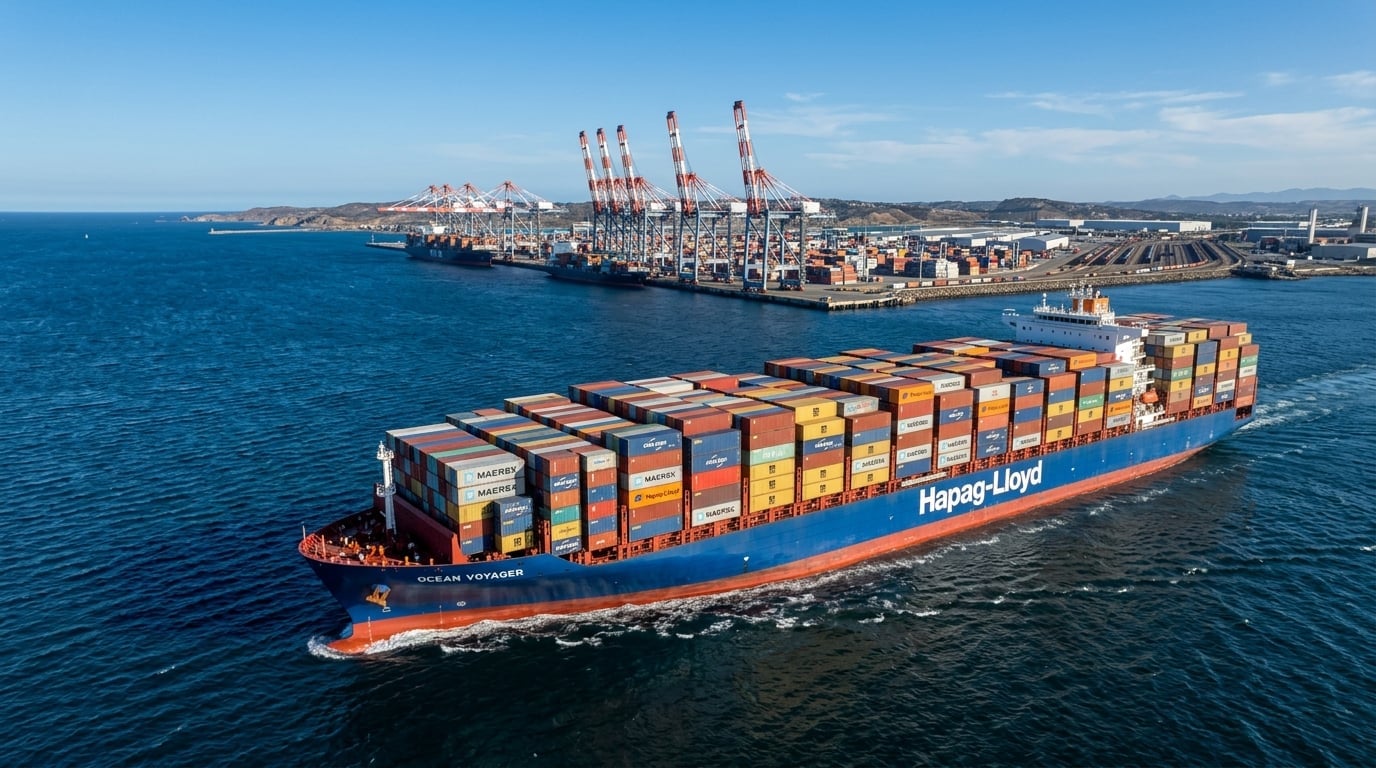
Two years after Houthi attacks first disrupted traffic through the Bab-el-Mandeb strait, the Red Sea shipping crisis has evolved from an acute emergency into a structural feature of global trade. As of mid-2026, the vast majority of container vessels serving Asia-Europe and Asia-US East Coast lanes continue to sail around Africa's Cape of Good Hope rather than risk the Suez Canal shortcut. The result? Ocean freight costs remain elevated, supply chain delays have become the new baseline, and procurement teams are rewriting their playbooks to survive in a market where 10-14 extra days at sea is now standard operating procedure.
This article breaks down the data driving these decisions—from Drewry World Container Index and Freightos Baltic Index readings to carrier network adjustments—and offers actionable procurement strategies for logistics professionals navigating the most disruptive shipping environment in a generation.
The Red Sea Crisis in 2026: Why Route Diversions Persist
The origins of this crisis are well documented. Beginning in late 2023, attacks on commercial vessels in the Red Sea forced carriers to suspend Suez Canal transits and reroute around the Cape of Good Hope. What began as a temporary safety measure has hardened into a prolonged operational norm.
As of June 2026, only a handful of carriers have tested limited Suez returns—and even those have been short-lived. In February 2026, Maersk and Hapag-Lloyd's Gemini Cooperation briefly resumed select Red Sea services, only to reverse course by March 1 after security conditions deteriorated again. Maersk also suspended transits through the Strait of Hormuz, citing unacceptable crew and cargo risk. These reversals sent a clear signal to the market: the Cape route is not a contingency plan anymore. It is the plan.
The operational impact is staggering. The Cape diversion adds roughly 3,000-3,500 nautical miles to each voyage. Industry analysts estimate this extended routing is absorbing between 5% and 9% of global container fleet capacity at any given time. That artificial tightening has prevented a total freight rate collapse despite a historic influx of new vessel deliveries between 2024 and 2026. For procurement teams, this means the supply squeeze is not going away simply because more ships exist on paper.
Freight Rates in 2026: How Much Higher Are Ocean Freight Costs?
If your ocean freight budget felt tighter this year, the data confirms it. Drewry's World Container Index and the Freightos Baltic Index both show rates that, while below the 2024 panic peaks, remain structurally elevated above pre-crisis baselines.
As of late June 2026, the Drewry WCI composite stood at $4,166 per 40-foot container—nearly triple the ~$1,500 benchmark from late 2023. Individual lanes tell an even sharper story. Shanghai to Rotterdam was assessed at $4,392 per FEU, while Shanghai to New York hit $7,149. The Freightos Baltic Index recorded China-US East Coast rates at $6,300 in early June, a 25% spike driven by an early peak season and shipper frontloading ahead of potential tariff changes.
| Trade Lane | Index | Rate (per 40ft Container) | Pre-Crisis Baseline (Late 2023) |
|---|---|---|---|
| Global Composite | Drewry WCI | $4,166 | ~$1,500 |
| Shanghai to New York | Drewry WCI | $7,149 | ~$2,500 |
| China to US East Coast | Freightos FBX | $6,300 | ~$2,400 |
| Shanghai to Rotterdam | Drewry WCI | $4,392 | ~$1,300 |
| China to N. Europe | Freightos FBX | $4,000 | ~$1,400 |
These figures do not even capture the full cost burden. War-risk insurance premiums, higher fuel burn from the longer route, and environmental compliance costs—including EU Emissions Trading System charges adding $150-$400 per container—have established a new "green floor" under pricing. For procurement teams locked into annual contracts signed before June, the gap between contract and spot rates is creating painful budget overruns.
Lead Time Disruptions: When Will Supply Chain Delays Normalize?
The short answer: not soon. The Cape of Good Hope detour consistently adds 10 to 14 days to Asia-Europe transit times and similar extensions to Asia-US East Coast schedules. For supply chain planners accustomed to predictable 25-30 day transits, this represents a 40-50% increase in ocean lead time.
The inventory math is brutal. A manufacturer running lean just-in-time replenishment now needs an additional 10-14 days of safety stock to cover the same demand signal. That means more capital tied up in transit, higher warehouse carrying costs, and less flexibility to respond to demand shocks. In effect, the Cape route has become "floating storage" for thousands of companies—a costly buffer they never asked for.
There is also a reverse risk to watch. If a large-scale, uncoordinated return to the Suez Canal happens suddenly, analysts warn of severe "vessel bunching" at European ports. Ships from both the Cape and Suez routes would arrive simultaneously, triggering 2-3 weeks of terminal congestion. Weeks later, Asia would face equipment shortages as containers fail to reposition in time. The normalization path is not a straight line; it is a logistics minefield.
Carrier Responses and Market Consolidation
Major carriers have not stood still. But their adaptations reveal the limits of operational flexibility in a constrained geography.
The Gemini Cooperation—Maersk and Hapag-Lloyd's alliance formed in early 2026—attempted a phased return to Red Sea routing for its ME11 and IMX services. The experiment lasted less than a month before security reversals forced both carriers back to the Cape. This pattern has been repeated across the industry: cautious testing, followed by rapid retreat when regional conditions worsen.
MSC and most other major liners have avoided the Red Sea entirely since early 2024, choosing operational certainty over the Suez Canal's time savings. The prevailing industry strategy is now a "dual-route equilibrium," where the Cape route serves as the baseline and Suez transits are treated as high-risk exceptions requiring security premiums and contingency planning.
This has also affected alliance dynamics. Blank sailings have increased as carriers attempt to match deployed capacity with demand, while port rotation schedules have been redrawn to accommodate longer round-trip cycles. Service reliability has improved on some lanes—carriers are now building in the Cape extension as standard—but schedule integrity remains vulnerable to port congestion, weather delays, and equipment imbalances.
Procurement Strategies to Mitigate Freight Cost Inflation
So what should procurement and logistics teams do? The answer is not simply "pay more and wait longer." Leading shippers have moved beyond crisis reaction into strategic adaptation.
Adopt Flexible Contracting Models
The era of rigid annual ocean freight contracts is fading. Hybrid models that blend secured base capacity with spot-market flexibility are becoming standard. Index-linked contracts, which tie rates to public benchmarks like the Drewry WCI or Freightos Baltic Index, are gaining traction. These structures ensure pricing stays aligned with market reality and protect both shipper and carrier from extreme volatility.
Diversify Routing and Port Pairs
Shippers are increasingly shifting Asia-US East Coast cargo to transpacific routes—landing at West Coast ports like Los Angeles or Long Beach and moving inland via rail or truck. This bypasses the Red Sea entirely and can offer competitive transit times when the Cape diversion is factored in. For European-bound cargo, some companies are exploring rail corridors from China through Central Asia or splitting shipments across multiple ports to spread risk.
Increase Safety Stock Strategically
The 10-14 day transit extension is a known variable now. Smart procurement teams have adjusted ERP parameters and permanently raised safety stock levels for critical SKUs. While this increases working capital requirements, it is cheaper than stockout-related lost sales or emergency air freight.
Leverage Seasonal Procurement Timing Strategies
Timing matters as much as routing. Understanding how seasonal demand patterns interact with carrier blank sailings and capacity withdrawals can unlock meaningful savings. For example, seasonal procurement timing strategies like those used during the post-Chinese New Year capacity lull can help secure equipment and favorable rates before peak-season price spikes hit.
Integrate Mode Shifting into Standard Planning
Air freight and sea-air multimodal solutions are no longer emergency-only options. For high-value, time-sensitive categories like electronics, pharmaceuticals, and automotive components, companies are building air freight corridors into their standard logistics plans. Sea-air hubs such as Dubai and Los Angeles allow shippers to regain velocity without bearing the full cost of pure air freight.
Long-Term Outlook: Will the Suez Canal Ever Fully Recover?
The honest assessment is that the Suez Canal's role as the undisputed default route for Asia-Europe trade is no longer guaranteed. A "dual-route equilibrium" appears to be crystallizing, where the Cape of Good Hope serves as a semi-permanent risk-adjusted alternative.
Several structural forces support this thesis. First, the underlying geopolitical drivers of the Red Sea conflict remain unresolved. Until a lasting security solution is in place, the Suez route will carry a risk premium—in insurance, contingency planning, and potential rerouting costs—that makes the Cape route economically viable for a meaningful share of traffic.
Second, the shipping industry faces a massive capacity oversupply from new vessel deliveries ordered during the pandemic boom. The Red Sea diversions have been the single most important factor absorbing this excess capacity and propping up rates. A full Suez return would unleash that capacity back into the market, threatening a severe rate downturn. Carriers have a financial incentive to maintain the status quo, even if security conditions improve.
Third, environmental regulations are establishing a permanent cost floor. The EU ETS and IMO's Carbon Intensity Indicator are adding compliance costs that did not exist in the pre-2020 era. Even if geopolitical risks subside, baseline shipping costs will remain elevated compared to the "cheap freight" era of the 2010s.
For procurement professionals, the implication is clear: plan for volatility, not normalization. Build supply chains that can flex between routes, modes, and contract structures. Invest in visibility tools that track freight indices and transit times in real time. And treat route diversification not as a crisis response, but as a permanent design principle.
The Red Sea crisis has already lasted longer than most analysts predicted. The data suggests it is reshaping global trade in ways that will outlast the headlines. The teams that adapt their procurement strategies now will be the ones best positioned when the next disruption hits—and history suggests it will.


Comments
Post a Comment