Critical Minerals: Hedging Against Resource Nationalism

Critical Minerals, Critical Risks: Hedging Your Supply Chain Against Resource Nationalism
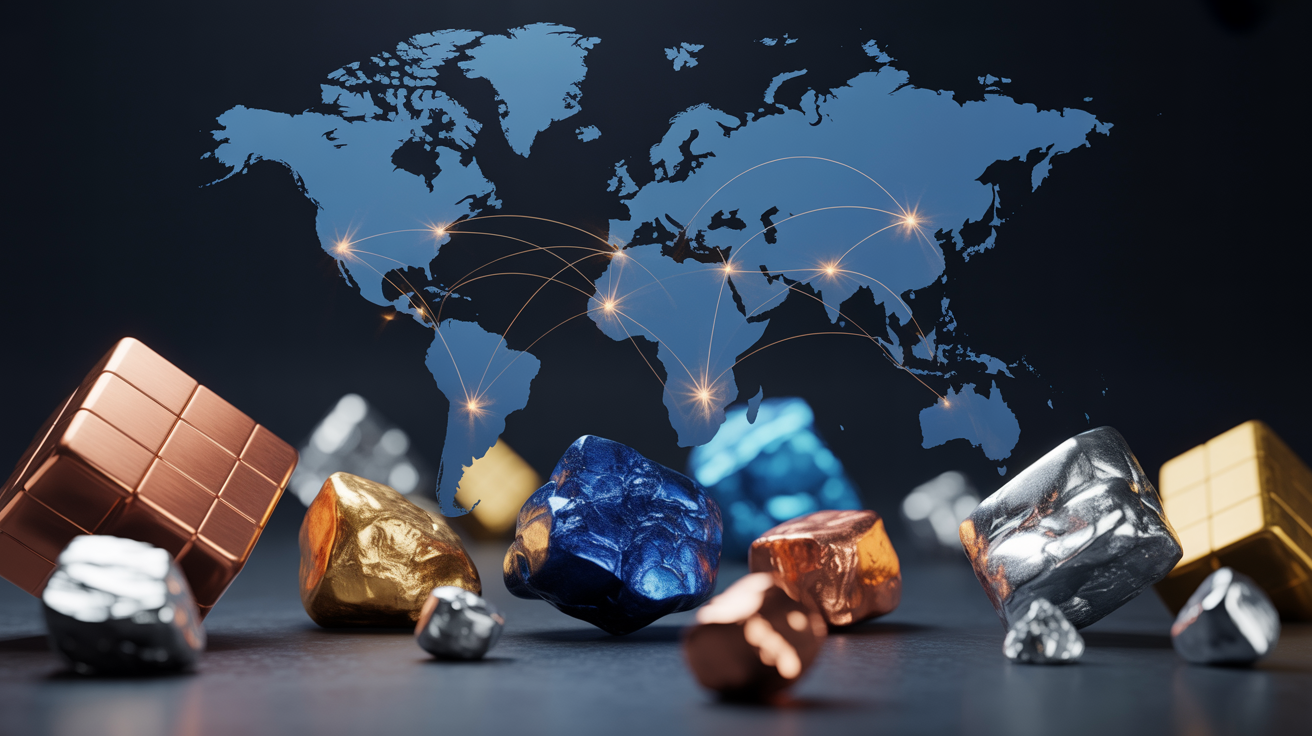
In January 2024, China announced sweeping export controls on gallium and germanium—two obscure elements critical to semiconductor manufacturing. Within weeks, global prices spiked by over 30%, and electronics manufacturers scrambled to secure alternatives. This wasn't an isolated incident; it was a calculated demonstration of resource nationalism, the emerging geopolitical weapon reshaping global supply chains. For procurement leaders in automotive, electronics, and renewable energy, the message is clear: the era of cheap, reliable access to critical minerals is over.
Why Critical Minerals Matter: The Strategic Backbone of Modern Industry
Critical minerals—lithium, cobalt, nickel, rare earth elements, graphite—form the foundation of technologies defining our era: electric vehicles, semiconductors, wind turbines, and solar panels. The International Energy Agency projects lithium demand will increase 40-fold by 2040 to meet clean energy goals, while rare earth demand could grow sevenfold.
Yet these materials share a dangerous characteristic: extreme geographic concentration. China dominates processing of nearly every critical mineral, controlling approximately 60% of global lithium refining, 70% of cobalt processing, and 90% of rare earth element production. For graphite—essential for EV batteries—China's share exceeds 70%. This creates structural vulnerability extending far beyond supply risk; it represents fundamental dependency on a single nation's industrial policy.
The semiconductor supply chain relies on gallium and germanium for high-performance chips. The EV battery materials sector depends on lithium, cobalt, nickel, and graphite sourcing. Wind turbines require neodymium and dysprosium for permanent magnets. When one country controls materials powering entire industries, supply chain managers face a strategic imperative.
The Rise of Resource Nationalism: A New Geopolitical Weapon
Resource nationalism—using export controls, processing requirements, and nationalization to leverage natural resources for political gain—has emerged as a defining feature of 21st-century geopolitics. Its application to critical minerals represents a fundamental shift in how nations compete.
China's gallium and germanium export controls in 2023-2024 were just the opening salvo. In December 2023, China expanded restrictions to graphite, requiring special licenses for high-purity grades essential for EV batteries. Indonesia banned exports of unprocessed nickel ore in 2020, forcing manufacturers to build processing facilities domestically. By 2025, Indonesia controlled over 50% of global nickel production.
In Latin America, lithium nationalization discussions have gained momentum. Mexico nationalized its lithium sector in 2023, declaring it a strategic resource. The Democratic Republic of Congo, producing 70% of the world's cobalt, increased royalties on "strategic" minerals from 2% to 10%, directly impacting EV battery materials sourcing economics.
These actions share a common motivation: countries with critical mineral resources are leveraging them to capture value, develop domestic industries, and gain geopolitical influence. For supply chain managers, this creates volatility where access, pricing, and regulations shift rapidly based on political calculations divorced from market fundamentals.
The Real Cost of Concentration: Case Studies in Supply Chain Vulnerability
Automotive and EV Sector: Between 2020 and 2022, lithium carbonate prices increased over 500%, driven by surging EV demand and limited processing capacity. Major automakers like Ford, GM, and Tesla were forced to sign long-term offtake agreements at elevated prices, compressing margins on EV models. The lithium and cobalt sourcing challenge became so acute that automakers announced direct investments in mining operations—a dramatic departure from traditional procurement.
Semiconductor Industry: China's gallium and germanium export controls in 2023-2024 created immediate supply constraints for compound semiconductors. Gallium prices spiked from $300/kg to over $400/kg within months. The semiconductor supply chain disruption rippled through electronics, demonstrating how a single chokepoint cascades across industries.
Renewable Energy: When China tightened rare earth export quotas in 2023, wind turbine manufacturers faced price increases and supply uncertainty. Neodymium-iron-boron magnet costs increased approximately 25% between 2023 and 2024, threatening project economics in an industry operating on thin margins.
The common thread: concentration risk means losing control over cost structure, production timeline, and competitive position. The "China +1" strategy has proven insufficient when fundamental processing capacity remains concentrated.
Strategic Hedging: Five Approaches to Diversify Your Critical Minerals Supply Chain
1. Geographic Diversification: Beyond China
Geographic diversification is complex—while many countries have mineral deposits, few have processing infrastructure to convert raw ore into battery-grade or semiconductor-grade materials.
Australia produces approximately 50% of global lithium ore, though much is still shipped to China for processing. Companies like Albemarle are investing in Australian processing facilities. Canada offers significant deposits with government incentives through its Critical Minerals Strategy. The US Inflation Reduction Act provides substantial tax credits for EV batteries sourcing materials domestically or from FTA partners, catalyzing investment in lithium processing and rare earth separation.
The EU's Critical Raw Materials Act aims to ensure that by 2030, no more than 65% of consumption of each strategic raw material comes from a single country—a direct response to Chinese dominance. Processing capacity is the real bottleneck. For those managing critical minerals supply chain strategy, understanding strategic timing in China-centric supply chains remains essential even as diversification proceeds.
2. Vertical Integration and Long-Term Contracts
Traditional procurement models are increasingly untenable. Tesla's direct investments in Nevada lithium mining and GM's investment in Lithium Americas represent a new model where automakers become mining companies. Long-term offtake agreements (5-10 years) provide miners financial certainty while giving buyers price stability and guaranteed supply. For rare earth elements sourcing, where processing expertise is highly specialized, partnerships with established processors may be the only viable path.
3. Material Substitution and Circular Economy
Research into alternative battery chemistries—sodium-ion batteries, lithium-iron-phosphate (LFP) batteries eliminating cobalt, solid-state batteries—is accelerating. CATL has commercialized sodium-ion batteries for certain applications. Current EV battery recycling rates are low (under 5%), but companies like Redwood Materials are building facilities recovering over 95% of critical materials. As first-generation EVs reach end-of-life around 2030, recycling will dramatically increase.
4. Inventory Buffering and Strategic Stockpiling
The shift from "just-in-time" to "just-in-case" is particularly relevant for critical minerals. Leading manufacturers are increasing safety stock from 30-60 days to 90-180 days or more. If your production line generates $10 million in margin daily, a one-week shutdown costs $70 million—far exceeding inventory carrying costs. Government strategic reserves are expanding: the US maintains a National Defense Stockpile, the EU is establishing reserves under the Critical Raw Materials Act, and Japan has long maintained stockpiles.
5. Enhanced Supply Chain Visibility and Risk Monitoring
Multi-tier supply chain mapping—understanding not just direct suppliers but their suppliers and ultimate raw material sources—is essential for geopolitical risk management. Real-time geopolitical risk intelligence includes monitoring export controls, political developments, infrastructure disruptions, and social media sentiment signaling labor unrest or policy changes. Scenario planning and stress testing help identify vulnerabilities. Advanced analytics and AI enable predictive risk management, allowing companies to anticipate disruptions and adjust procurement proactively.
Looking Ahead: The Future of Critical Minerals Sourcing
Technology breakthroughs could reduce mineral intensity—solid-state batteries might reduce lithium requirements, and advanced recycling could dramatically increase recovery rates. However, these technologies are years from commercial scale, and demand growth outpaces efficiency gains. Deep-sea mining of polymetallic nodules could provide new sources, though environmental concerns and regulatory uncertainty remain barriers.
The regulatory landscape is tightening. Traceability requirements—proving origin and processing chains—are becoming mandatory for ESG reporting. The EU's Corporate Sustainability Due Diligence Directive will require companies to demonstrate responsible sourcing practices. International cooperation remains uncertain: will nations cooperate to develop diversified supply chains, or will fragmentation into competing blocs continue?
For procurement leaders, critical minerals are no longer commodities to purchase at lowest cost—they are strategic assets requiring long-term planning, capital investment, and active risk management. Organizations treating supply chain diversification as a strategic priority will be best positioned for the volatile decade ahead. Successful strategies combine geographic diversification, vertical integration, material innovation, inventory buffering, and enhanced visibility.
Conclusion
The era of abundant, cheap critical minerals is over. Resource nationalism has transformed these materials into geopolitical weapons, creating systemic vulnerabilities across industries. Recent disruptions—lithium price spikes, gallium export controls, nickel processing requirements—are harbingers of a new normal.
The choice is clear: adopt a proactive, strategic approach to critical minerals sourcing, or accept increasing vulnerability. Organizations investing now in diversification, vertical integration, and supply chain visibility will build competitive moats difficult for rivals to replicate. Those waiting will perpetually react to crises, pay premium prices, and lose market share.
Assess your current exposure to critical mineral concentration risk, develop a comprehensive diversification roadmap, and begin building relationships and capabilities securing your supply chain for the decade ahead. In the new geopolitics of critical minerals, supply chain resilience isn't just defensive—it's a source of competitive advantage.


Comments
Post a Comment