Mexico's Nearshoring Boom: New Manufacturing Powerhouse

Mexico's Nearshoring Boom: The New Manufacturing Powerhouse
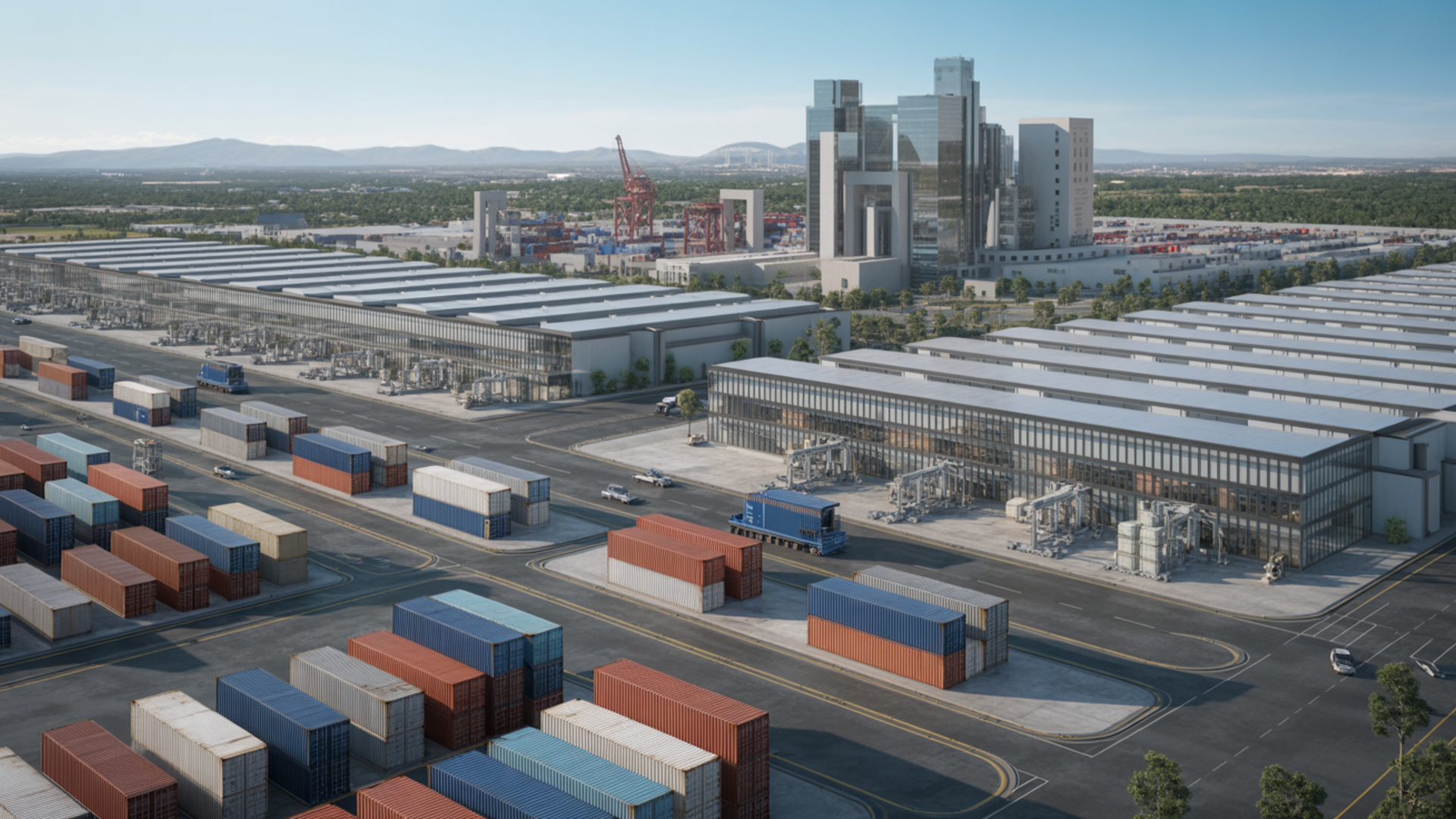
In a historic shift that has redrawn the map of global manufacturing, Mexico surpassed China as the top U.S. trading partner in 2023, marking the culmination of a nearshoring revolution that shows no signs of slowing. With $505.5 billion in U.S. imports in 2024—a 6.9% increase from the previous year—and nearly half of all U.S. businesses planning to increase nearshoring volumes in 2025-2026, Mexico has emerged as the dominant destination for North American manufacturing operations. This transformation represents more than a temporary supply chain adjustment; it is a fundamental restructuring of industrial geography driven by geopolitical tensions, trade policy evolution, and the relentless pursuit of supply chain resilience.
The Perfect Storm Driving Nearshoring to Mexico
The convergence of multiple forces has created an unprecedented opportunity for Mexico to capture manufacturing investment that once flowed exclusively to Asia. At the forefront are the ongoing U.S.-China trade tensions, which have imposed tariffs of 25-30% on Chinese goods, fundamentally altering the cost calculus for manufacturers. Companies that once accepted these duties as a cost of doing business are now actively seeking alternatives, and Mexico's geographic proximity makes it the natural beneficiary.
The COVID-19 pandemic exposed the fragility of extended global supply chains, with manufacturers experiencing firsthand the consequences of single-source dependency. When Asian factories shuttered and maritime logistics collapsed, companies that had optimized solely for cost discovered they had sacrificed resilience. The result has been a strategic pivot toward supply chain diversification, with Mexico offering the ideal combination of proximity, capability, and trade agreement advantages.
Labor cost dynamics have also shifted dramatically. While Mexico was once viewed primarily as a low-wage alternative, China's wage inflation has eroded its cost advantage. Mexican factory wages now average $4.20 per hour compared to China's $6.50, but the real arbitrage opportunity lies in total landed cost. When a company can reduce shipping time from 36 days to just 2 days, the savings extend far beyond freight rates—they encompass inventory carrying costs, working capital efficiency, and market responsiveness.
The United States-Mexico-Canada Agreement (USMCA) has provided the regulatory framework that makes this transition economically compelling. By ensuring tariff-free trade for goods meeting rules of origin requirements, the agreement has created a powerful incentive for regional production. By November 2025, the share of Mexican exports to the U.S. utilizing USMCA preferential treatment had doubled from 44.8% in January to 88.7%, demonstrating how rapidly companies are adapting their supply chains to maximize these benefits.
By the Numbers: Mexico's Manufacturing Transformation
The scale of Mexico's manufacturing transformation is evident in the data. Total bilateral trade between the U.S. and Mexico reached $839.6 billion in 2024, with Mexican goods representing 15.6% of all U.S. imports. Between 2019 and 2022 alone, U.S.-Mexico trade grew by nearly 27%, far outpacing growth with other trading partners.
Foreign direct investment tells an equally compelling story. Mexico attracted $40.906 billion in FDI during the first three quarters of 2025, representing a 14.5% year-over-year increase. More significantly, new investments surged by 218.6%, indicating that companies are not merely expanding existing operations but establishing entirely new manufacturing footprints. The pipeline remains robust, with Mexico's Ministry of Finance registering 174 investment announcements in 2023 that could bring an additional $74 billion in FDI.
Manufacturing facility construction provides a leading indicator of this growth trajectory. Construction activity surged by 47.4% in August 2023 compared to the previous year, with industrial real estate occupancy rates reaching 97-100% in key markets. This capacity constraint has prompted developers to invest heavily in new industrial parks, with projects like FINSA's $220 million Monterrey Garcia Industrial Park targeting 25 global companies and 14,000 direct jobs.
Industry Spotlight: Automotive and Electronics Lead the Way
The automotive sector exemplifies Mexico's manufacturing maturity. The country produced nearly 4 million vehicles in 2024, with the sector accounting for 31.4% of Mexico's total exports, valued at $193.9 billion. Mexico's automotive supply chain is deeply integrated across North America, with the country producing 40% of all U.S. auto parts and serving as a world leader in motors, batteries, and automotive glass production.
The transition to electromobility is accelerating investment in Mexico's automotive sector. Nuevo León alone accumulated $1.4 billion in automotive investment during the first nine months of 2025, representing 47.4% of Mexico's total. This investment is flowing not just into traditional internal combustion engine production but into the entire EV value chain, including battery manufacturing and electronic component production.
Electronics manufacturing services represent the fastest-growing sector, with the market projected to expand from $53.2 billion in 2025 to $97.4 billion by 2031—a compound annual growth rate of 10.6%. This growth is fueled by the nearshoring of high-tech production lines, including semiconductors and telecommunications equipment. The sector's capacity utilization has exceeded previous year levels by 4.5%, indicating that existing facilities are operating at full capacity while new investments come online.
The USMCA Advantage: Trade Policy as Catalyst
The USMCA has fundamentally altered the economics of North American manufacturing by ensuring that most goods traded across the U.S.-Mexico border remain tariff-free when they meet specific rules of origin requirements. For companies outside the agreement, duties can reach 25-30%, creating a powerful incentive for regional production.
Beyond tariff elimination, the agreement has streamlined customs procedures through automated processing systems and simplified certification of origin. In June 2025, 77% of goods from Mexico entering the U.S. qualified for USMCA benefits, up dramatically from earlier in the year. This compliance jump reflects both growing familiarity with the agreement's requirements and strategic investments in supply chain reconfiguration to maximize benefits.
The agreement's rules of origin requirements have created a secondary effect: the development of regional supply chains. Rather than simply assembling imported components, manufacturers are increasingly sourcing inputs from within North America to meet USMCA thresholds. This has catalyzed investment not just in final assembly operations but across entire value chains, from raw material processing to component manufacturing.
For procurement professionals navigating this landscape, diversifying sourcing to secondary hubs like Mexico has become a critical strategy for mitigating supply chain disruptions while optimizing landed costs. The USMCA framework provides the regulatory certainty needed to make long-term sourcing commitments, though the upcoming 2026 review of the agreement will be a critical test of its durability.
Regional Powerhouses: Nuevo León and Coahuila Lead the Charge
Mexico's nearshoring success is not uniformly distributed across the country. Instead, specific regions have emerged as manufacturing powerhouses, each with distinct advantages and industry concentrations.
Nuevo León, anchored by the Monterrey metropolitan area, leads Mexico's manufacturing sector with a sectoral GDP of $47 billion and contributed nearly 90% of the overall increase in manufacturing activity during the first half of 2025. The state's advantages are multifaceted: proximity to the U.S. border (just 139 miles from the closest crossing), two international airports, and a highly skilled workforce produced by universities like the Monterrey Institute of Technology (ITESM) and the Autonomous University of Nuevo León (UANL).
The state has pursued a deliberate cluster strategy since 2004, expanding to 15 strategic clusters by 2024, including automotive, aerospace, appliances, medical devices, renewable energy, and digital technology. This ecosystem approach has created self-reinforcing advantages, with suppliers, skilled labor, and specialized services concentrating in specific industries. Nuevo León's dominance in home appliances is particularly striking—the state produces 66% of all refrigerator-freezers manufactured in Mexico and accounts for over 40% of national home appliance production.
Coahuila has emerged as a complementary manufacturing hub, receiving $227.44 million in automotive investment during the first nine months of 2025. The state's strategic location reinforces northern Mexico's manufacturing capacity, with excellent connectivity to U.S. markets and strong performance in high-value-added export industries.
Border regions including Tijuana, Ciudad Juárez, and Mexicali offer their own advantages, particularly for electronics manufacturing. These mature manufacturing ecosystems command higher compensation levels due to proximity to the U.S. and established supplier networks, but they also offer greater building availability, with industrial lease options doubling or tripling in 2026 as some manufacturers paused expansion plans in 2025.
The Chinese Factor: Strategic Relocation to Maintain Market Access
One of the most significant developments in Mexico's nearshoring boom has been the influx of Chinese companies establishing manufacturing operations to maintain access to the U.S. market. This trend, while controversial, demonstrates the power of Mexico's geographic and regulatory advantages.
Chinese furniture manufacturer Man Wah established a factory in Monterrey in 2022, producing "Made in Mexico" sofas for U.S. retailers including Costco and Walmart. The company plans to significantly increase production and employment, having successfully demonstrated that products manufactured in Mexico can qualify for USMCA benefits regardless of the parent company's nationality.
The scale of Chinese investment extends well beyond furniture. Lingong Machinery Group announced a $5 billion investment for a construction equipment factory in Nuevo León in October 2023, while solar panel manufacturer Trina Solar committed up to $1 billion for Mexican operations. Electric vehicle maker BYD announced major expansion plans in February 2024, positioning itself to serve both the Mexican market and potentially the U.S. market in the future.
This Chinese investment has created tension with U.S. policymakers, who worry about Chinese goods entering via Mexico as a "backdoor" to evade tariffs. The Biden administration has worked with the Mexican government to prevent tariff evasion on products like steel and aluminum, and questions persist about whether Mexican-assembled goods using Chinese components are truly "Mexican" under USMCA rules.
For Mexico, however, the investment represents economic opportunity regardless of its origin. The challenge is ensuring that Chinese companies develop local supplier networks rather than simply establishing assembly operations that import most components, which would limit the broader economic benefits of nearshoring.
Navigating the Challenges: Infrastructure, Talent, and Regulatory Complexity
Despite Mexico's advantages, significant challenges threaten to constrain the full realization of nearshoring's potential. Infrastructure deficiencies top the list, with energy, water, and transportation systems struggling to keep pace with industrial demand.
Energy infrastructure presents the most immediate constraint. Mexico has experienced blackouts that indicate current supplies may be inadequate for increased industrial operations. The country's power sector has seen insufficient investment, struggling to meet growing domestic demand while accommodating new manufacturing facilities. More problematically, Mexico's heavy reliance on non-renewable energy sources conflicts with the ESG commitments of many companies considering nearshoring. Restrictive policies on private investment in the electricity sector have delayed new generation and transmission projects, forcing companies to make significant investments to connect to the grid.
Water scarcity poses an equally serious challenge, particularly in northern states like Nuevo León that are experiencing severe droughts. Water-intensive industries such as electric vehicle manufacturing face difficult decisions about site selection, and the sufficiency of wastewater treatment infrastructure varies significantly across states.
Transportation and logistics bottlenecks compound these challenges. Mexico's largest port, Manzanillo, handles approximately 3 million TEUs annually—a fraction of the 30 million TEUs processed by average Chinese ports. The Ministry of Infrastructure estimates that $400 billion in investment will be needed by 2032 to upgrade ports, border crossings, and railways to handle nearshoring-related traffic. Mexico's performance in the World Bank's Logistics Performance Index has declined from 55th in 2018 to 66th in 2023, reflecting these infrastructure constraints.
The talent gap represents a more nuanced challenge. While Mexico offers a skilled workforce, particularly in established manufacturing hubs, the rapid pace of nearshoring has created localized shortages in specialized roles. Regional wage differences reflect these dynamics, with border regions and the Bajio automotive cluster commanding premium compensation for engineering and technical positions.
Regulatory complexity and security concerns round out the challenge landscape. Recent judicial reforms have raised questions about legal certainty for investors, while corruption, fraud, theft, and extortion force companies to allocate significant portions of operational budgets to security. Administrative delays in obtaining permits hinder proper planning, and policy uncertainty in areas like renewable energy creates investor hesitation.
Strategic Imperatives: Capitalizing on the Nearshoring Wave
For manufacturers evaluating nearshoring opportunities, success requires a disciplined approach to site selection and operational planning. The first imperative is conducting thorough infrastructure assessments before committing capital. Verifying energy, water, and transportation availability is non-negotiable, as is understanding regional wage dynamics and talent availability.
A phased approach to relocation often proves more effective than wholesale transfer. By gradually shifting production while maintaining existing operations, companies can manage risk, develop supplier relationships, and build organizational capabilities without betting the entire operation on a single transition. This approach also allows for course correction if challenges emerge.
Supplier development represents a critical success factor. Companies that invest in building local supplier networks maximize USMCA benefits while reducing dependency on imported components. This requires active engagement with Mexican suppliers, technical assistance to meet quality standards, and long-term contractual commitments that justify supplier investments in capacity and capability.
Technology integration accelerates the benefits of nearshoring. Supply chain visibility tools, AI-driven quality management systems, and digital tracking enable companies to manage the complexity of multi-site operations while maintaining the responsiveness that nearshoring promises. These technologies also support USMCA compliance by providing the documentation and traceability required for rules of origin certification.
For procurement professionals, the nearshoring wave demands new capabilities. Supplier discovery and vetting in Mexico require understanding regional ecosystems, industry concentrations, and capability differences across states. Contract negotiations must address USMCA qualification explicitly, with clear commitments on sourcing, documentation, and compliance. Quality assurance processes must account for the reality that Mexican suppliers may be ramping up capacity rapidly, requiring more intensive monitoring during initial production runs.
Investors face a different set of opportunities. Industrial real estate occupancy rates of 97-100% in key markets signal strong demand and pricing power for well-located properties. Infrastructure projects in energy generation and transmission, water treatment, port modernization, and logistics networks offer long-term returns supported by structural demand. Sector focus should emphasize automotive (especially EV), electronics, aerospace, and medical devices, which show the strongest growth trajectories.
The Future of Nearshoring: Automation, Sustainability, and Digital Integration
Mexico's nearshoring advantage will increasingly depend on factors beyond labor cost. As the country's minimum wage continues to rise—increasing approximately 5% in 2026 to adjust for inflation—competitiveness will be defined by productivity, repeatability, and operational visibility rather than wage rates alone.
Automation and Industry 4.0 technologies will play a central role in this evolution. The integration of IoT, AI, and data analytics in Mexican manufacturing facilities enables productivity levels that justify higher labor costs while maintaining cost competitiveness with Asian alternatives. This requires collaboration between the private sector, universities, and government to develop the talent needed to operate and maintain advanced manufacturing systems.
Sustainability integration is transitioning from optional to mandatory. Companies are implementing green energy solutions and carbon-neutral practices in nearshoring centers, driven both by regulatory requirements and corporate ESG commitments. Mexico's challenge is creating the policy environment and infrastructure that supports these investments, particularly in renewable energy generation and transmission.
Digital supply chain technologies are enabling new levels of integration and responsiveness. AI-driven quality management systems use predictive analytics for defect prevention, while blockchain provides enhanced traceability for USMCA compliance and supply chain transparency. Real-time tracking tools deliver end-to-end visibility and enable collaborative inventory planning that maximizes the speed advantages of nearshoring.
The broader Latin American landscape is also evolving. While Mexico dominates nearshoring to the U.S., countries including Colombia, Peru, Chile, El Salvador, and the Dominican Republic are emerging as complementary destinations with their own comparative advantages. Intra-regional trade is growing, and sector specialization is developing, with different countries positioning themselves for specific industries based on their unique capabilities and resources.
Seizing the Nearshoring Opportunity
Mexico's emergence as America's manufacturing powerhouse represents a structural shift in global industrial geography, not a temporary response to pandemic disruptions or trade tensions. The combination of geographic proximity, trade agreement advantages, manufacturing capability, and cost competitiveness creates a value proposition that will endure even as specific drivers evolve.
The upcoming 2026 USMCA review will be a critical test of the agreement's durability and Mexico's commitment to the labor, environmental, and compliance standards that underpin preferential trade treatment. While uncertainty always accompanies such reviews, the economic logic of North American manufacturing integration is sufficiently compelling that major disruption appears unlikely.
For companies that act strategically now—conducting thorough due diligence, building supplier relationships, investing in technology and compliance capabilities, and taking a phased approach to transition—the nearshoring wave offers sustainable competitive advantage. The window of opportunity is open, but it will not remain so indefinitely. As infrastructure constraints tighten, industrial real estate occupancy approaches 100%, and the most capable suppliers reach capacity, the cost and complexity of nearshoring will increase.
The companies that will thrive in this new industrial landscape are those that recognize nearshoring not as a tactical response to current challenges but as a strategic repositioning for long-term competitiveness. Mexico's nearshoring boom is not just about where products are made—it is about how companies think about supply chain resilience, total landed cost, and the geographic arbitrage opportunities that define industrial success in an era of geopolitical complexity and accelerating change.


hi
ReplyDeleteMexico’s nearshoring boom highlights the growing importance of efficient manufacturing, reliable supply chains, and quality packaging solutions. Kingchuan Packaging offers In Mold Label solutions that help manufacturers improve product presentation and create durable, integrated labels for plastic containers.
ReplyDelete